 Filiation Généalogique des Guérêt~Dumont
| Filiation Généalogique des Guérêt~Dumont
|
| Home Page | The Journey | Family History | Donations | Book Purchase | Family Roots | Resource Links |
| Name Origin | Coat of Arms | Main Branches | Join the Society | Website Review | FAQ | Reunions |
|
| (1) Montmirel, France | (2) La Rochelle, France | (3) Beauport, QC #1 | (4) Jacques Gueret Family Life | (5) Mont-Louis |
| (6) Beauport,QC #2 | (7) Riviere-du-Loup,QC | (8) L'Isle Verte | (9) Kamouraska | (10) Le Berceau |



|
|
|
|
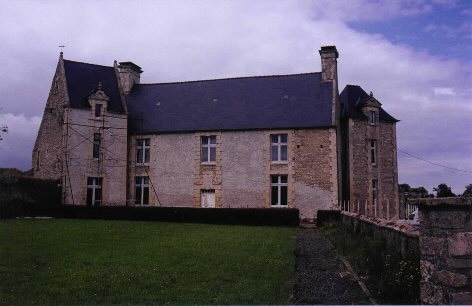
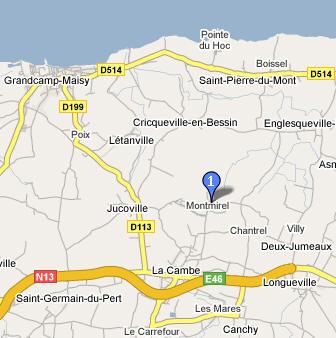
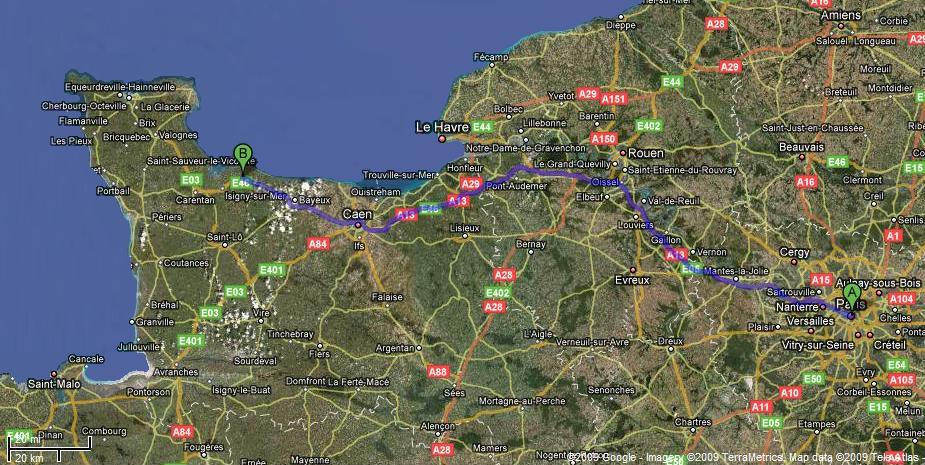
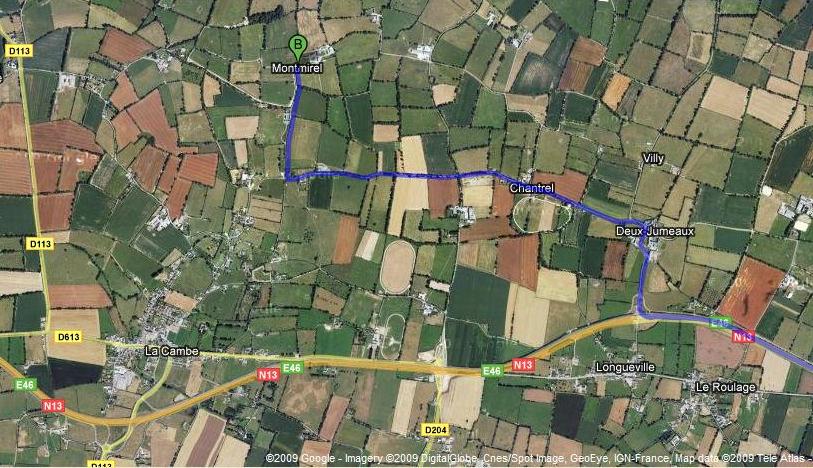
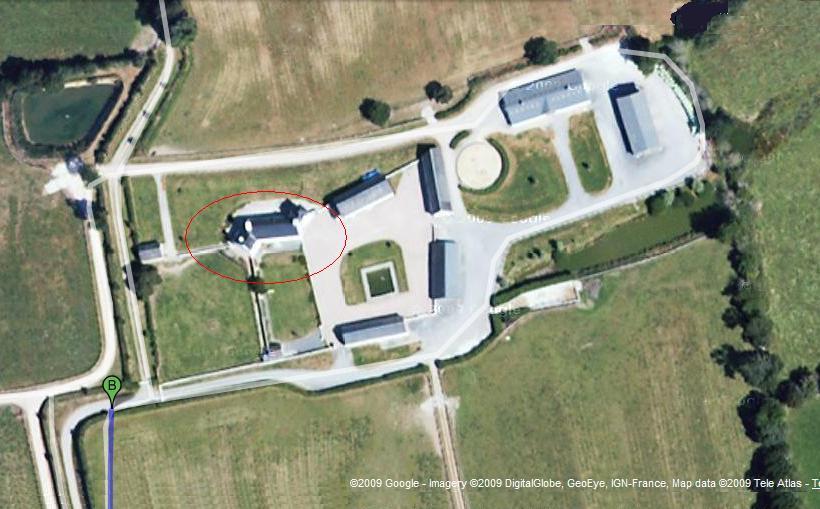
Francoise was the daughter of "Seigneur" Jean de Meherence du Montmirel. Jean was familiarly referred to as "Seigneur du Mont." It is known that Francoise had retained her noble name by passing it on to her children as surnames. Another possibility is that people of that area referred to the children of Jean Guerey and Francoise du Montmirel as Jean Dumont's children due to their descendents from their "Seignurie", Lord du Montmirel. We know with certainty the Geuret dit Dumont name
originated in France. Jacques, son of Rene, is registered in
Canada under the name of Gueret dit Dumont where we can see that the
name Gueret was discontinued and Dumont now remains as the primary
family name. It is speculated that Jean Guerey was also of noble blood.
First, noble blood generally married among blood royalties. Second, the
godparent of Jean Guerey was "Seigneur du Bien." It is probable that he
was a relative. |
|
|
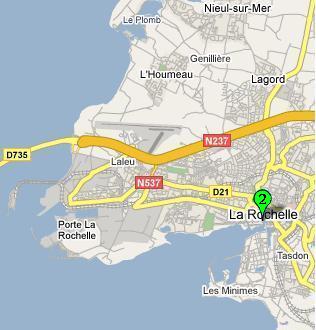
Jacques Gueret was the son of Rene and Madeleine Le
Vigoureux. He was born and baptized on It is believed that Jacques went to La Rochelle in view of obtaining a passport but we found no record as such. Yet it is understood that he signed a contract in 1691. It is also known that the law said in those days that if navigators were planning to travel aboard to new land, they were to have at least eight to nine men so as to obtain a contract. The contract was that upon arrival to their new locations, they were obliged to work and live with a family for at least two to three years before being able to acquire any land or a "concession" as known in those days. |
 |
|
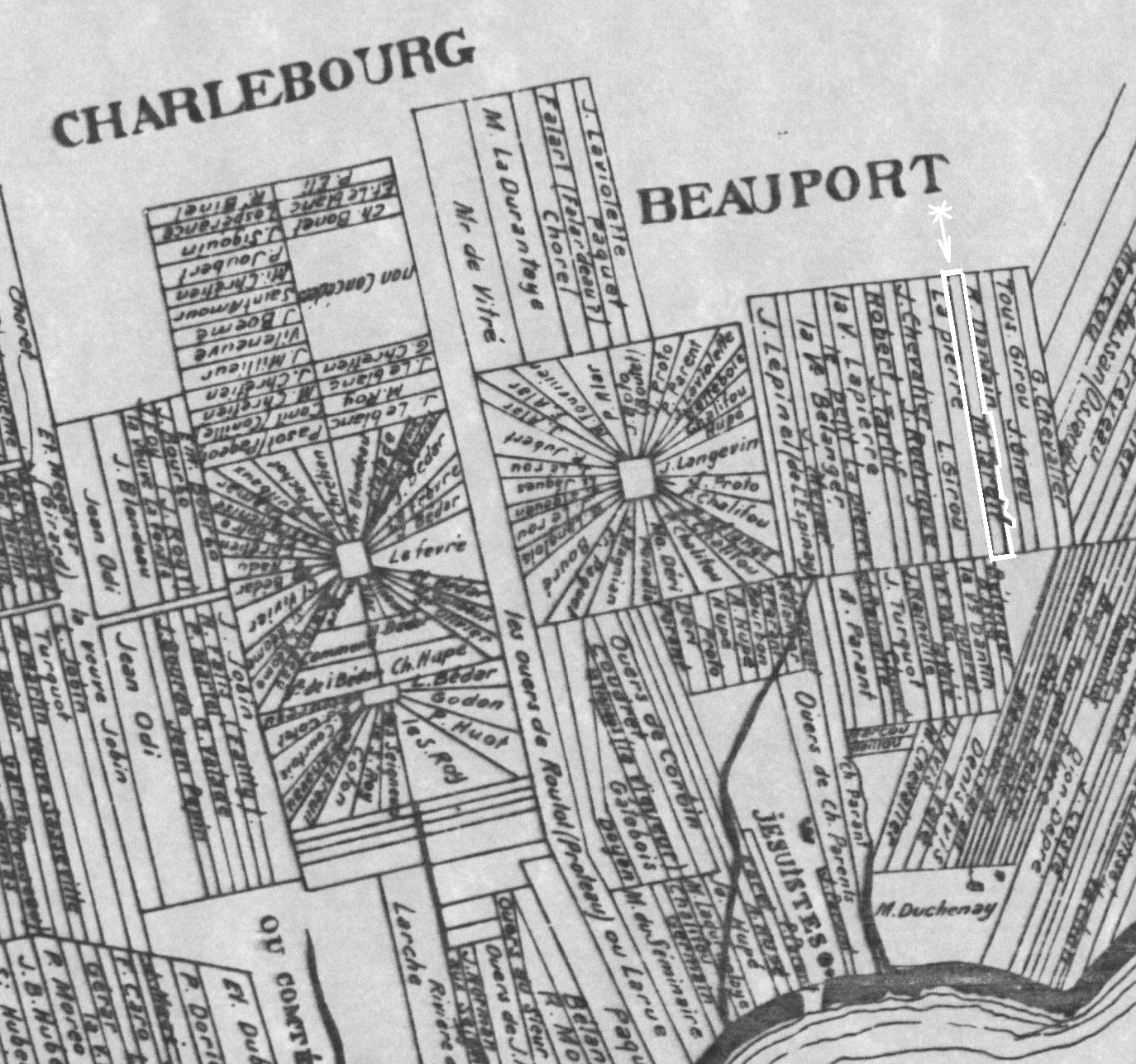
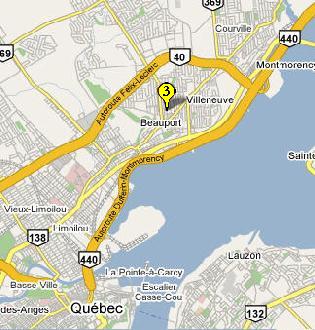
(3) Beauport, QC #1 On arriving in Beauport, Quebec, Jacques went directly
to Jacques Tardif, "seigneur" of Beauport Jacques Tardif, also a region veteran, origin of
Rouen, was the son of Pierre and Barbe Bourguignon. He married Barbe
d’Orange, daughter of King Pantaleon and Jeanne Neveu (S. Saturnin,
Chatre), on Jacques Tardif of Beauport, in the Seigneurie of
Giffard, hired Jacques Gueret to fulfill his contract obligations.
Things went well with Jacques Gueret. He appreciated and worked
hard to accomplish |
 |
|
(4) Jacques Gueret Family Life Jacques completed his three years of service and now
was in line to be on his own. Jacques and fallen in love with Jacques
Tardif’s daughter, Marie-Anne, Before their marriage Jacques and Marie-Anne signed a
contract renouncing her part of heritage in exchange for three acres
frontage situated between her |
|
|
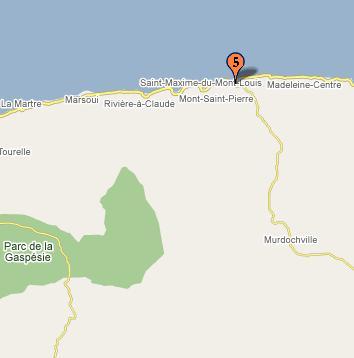
(5) Mont-Louis, QC In 1711, Jacques had three sons, ages 16, 14 and 12
years old. Jacques heard about some good land opening up in Mont-Louis,
Gaspe, which gave him much hope for expansion. In the spring of 1711,
after much thoughts were given to the new prospect, along with
determination, he left his homestead |
 |
|
(6) Beauport, QC #2 In 1713, the Gueret-Dumont family abandoned the land in Mont-Louis to return to their former homestead. On arrival, Jean-Baptiste was baptized on June 24, 1713. On July 20, 1713, another daughter was born and baptized, Marguerite. All in all, it had been quite an adventure but did
that discourage them? No, they constantly kept in search of
expansion. Jacques, still being young and courageous and after
spending another year in Beauport decided to give it another try.
This time it was a complete move from Beauport and Jacques
|
|
|
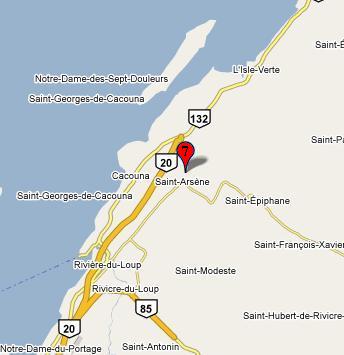
The Jacques Gueret-Dumont family moved to Riviere-du-Loup.
There, he signed a lease for five years.
|
 |
|
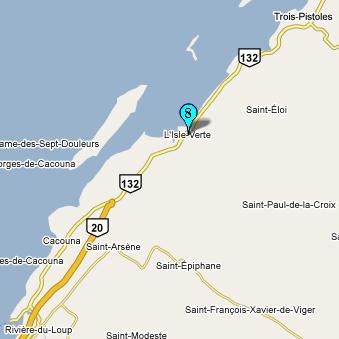
(8) L’Isle Verte, QC After the expiration of his lease in Riviere-du-Loup and possibly later, Jacques Gueret dit Dumont left the region for the "Seigneurie" of L’Isle Verte formerly owned by Baptiste Cote. In May, 1722, Jacques officially acquired a farm of six acres frontage by 40 feet long. It was situated 20 acres northwest of the "Seigneurie" of R. Michaud, L’Isle Verte, 134 feet wide. It is also known that Jacques’ son, Jacques, and his
wife, Genevive LeVasseur, also had acquired a concession in 1730
situated southwest of the Little River. Jacques, the son, did not have
any children. Jacques and Marie-Anne had retired in 1736 and passed the farm he had to his son, Jacques, and his daughter-in-law, Genevive LeVasseur. |
 |
|
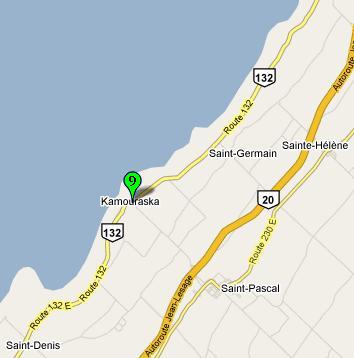
(9) Kamouraska, QC Jacques and Marie-Anne moved to Kamouraska to spend
their final days with their other children. Nine children baptized in Beauport. Alexandre, Pierre, and Charles died at an early age.
Marie Catherine #6 and Marguerite #11 founded their own homes. |
 |
|
Children of Jacques and Marie-Anne Current records indicate Jean w/2 kids; Michel w/8 kids; Joseph-Simon w/1 kid; Jean-Baptiste w/11 kids; Pierre w/3 kids and Prisque w/5 kids; both carried the Dumont family name throughout Quebec, New Brunswick, Ontario, Alberta and in the United States. Joseph-Simons’ family terminated after the fourth generation around 1827 - no male born to carry on the family name. The region where the family of Jacques Dumont
established is now known as St. Andre, Kamouraska. This is where we find
that Jacques Dumont, age 74, died and was buried the day after his death
on |
|
|
(10) Le Berceau Records show that the descendants of Pierre Dumont are the least in number. It seems that many of them left the region and settled in the United States, especially when the mills opened in the St. John Valley. We found in the Kamouraska region that Michel’s descendants are the most numerous and the majority are in the Canadian region. It is also known that in the first generation, there were numerous "petit" Dumont's. For example, Michel, himself, only had two married sons, Michel and Antoine and three married sons which already made up 10 new families. The grandson of Michel is also known to have had 11 married sons. It is believed that Michel, the son, had other married sons in the region of Bas St. Laurent. So, it is assumable that the descendants of Michel and Rose LeVasseur are the most numerous branch of Dumont's. It is actually more numerous than all of the four other brothers put together. Records show that four generations lived in Kamouraska, St. Andre and Riviere Ouelle before families started dispersing into other regions. Therefore, Kamouraska is known as the "berceau" of the grand Dumont family. The ancestral farm land, or concession, that Jacques
and M. Anne had transferred to his son Jean-Baptiste and wife Madeleine
de la Bourrier is still in the same family. It passed onto Ange Dion,
brother-in-law of Seigneur Cote, then to Jean-Baptiste Dumont and his
wife, Esther Dion, fifth generation. From father to son, this Dumont
property is still in the hands of ninth generation, Denis Dumont and
Madeleine Michaud in St. Andre de Kamouraska. |
|


|